

I know what it’s like to stand in front of a full closet and feel like you have nothing to wear.
You’re not alone. Most people own more clothes than ever but still struggle to put together outfits that actually look good.
The problem isn’t your wardrobe. It’s that nobody taught you the basic techniques that make dressing well simple.
I’m going to show you the core principles that stylists use every day. These aren’t complicated rules or expensive tricks. They’re simple dressing hacks jexphacks that work no matter your budget or body type.
This guide breaks down the fundamental techniques you need to create polished outfits. Not what’s trending this season. The timeless stuff that actually matters.
You’ll learn how to work with what you already own. How to spot what’s missing. And how to put pieces together in ways that make sense.
No fluff. Just the practical framework you need to feel confident getting dressed every morning.
The Foundation: Mastering Proportion and Silhouette
You know that feeling when an outfit just looks off but you can’t figure out why?
I used to stand in front of my closet for way too long. Everything fit. The colors worked. But something still felt wrong.
Turns out, I was breaking one simple rule without even knowing it.
Some stylists will tell you that fit is everything. Just buy clothes in your size and you’re good to go. They say proportions are overrated and you should just wear what feels comfortable.
Here’s where I disagree.
Fit matters, sure. But proportion is what makes an outfit actually work. You can have perfectly fitted pieces that still make you look shorter or wider than you are.
The difference comes down to how you divide your body visually.
The Rule of Thirds
Think of your body in three sections instead of two.
When you split yourself right down the middle (like with a long shirt that hits at your hips over regular jeans), you create a visual line that cuts you in half. It shortens your legs and throws off your whole silhouette.
But when you work in thirds? That’s when things click.
A cropped sweater with high-waisted trousers gives you a 1/3 to 2/3 ratio. Your top takes up one section and your bottom takes up two. This creates length and makes your proportions look more interesting.
Compare that to a tunic over low-rise jeans. Everything splits 50/50 and your body just looks… flat.
I started using dressing hacks jexphacks to fix this in my own wardrobe and the difference was immediate. Same clothes, better proportions.
Now here’s the other piece that matters.
Volume needs balance. If you’re wearing wide-leg pants or a full skirt, your top should be fitted. A slim turtleneck or a tucked-in blouse works. The contrast between loose and tight is what creates shape.
Flip it around and the same rule applies. Got a chunky knit sweater? Pair it with skinny jeans or a pencil skirt. Not another loose piece.
Before I leave the house, I run through a quick check. Where does my outfit divide? Am I balancing volume? Does one section overpower the rest?
Most of the time, one small adjustment (tucking in a shirt or swapping pants) fixes everything.
You don’t need a new wardrobe. You just need to rethink how the pieces you already own work together.
The Art of Color: Building a Cohesive Wardrobe Palette
You open your closet and stare.
Nothing goes together. You’ve got a red blazer that only works with one pair of pants and a green sweater you bought on impulse that sits there collecting dust.
I’ve been there.
The problem isn’t that you don’t have enough clothes. It’s that you don’t have a system. And without one, getting dressed feels like solving a puzzle every single morning.
Let me show you how to fix this.
Start with your neutrals. Pick three to four that actually work on you. Black, white, navy, grey, beige, camel. You don’t need all of them. Just the ones you’ll actually wear.
These become your foundation. The pieces that work with everything else.
Now here’s where it gets interesting.
Choose two or three accent colors. Hold them up to your face in natural light. Do they make you look tired? Skip them. Do they brighten your complexion? Keep them.
For me, it’s burgundy and forest green. For you, it might be rust and cream. The point is to pick colors you can mix with your neutrals without thinking too hard.
Once you have your palette, you need formulas that work.
Try monochromatic dressing first. Wear different shades of the same color together. A light blue shirt with navy pants and a denim jacket. It looks put together because it is (but it took you three minutes).
Or go with analogous pairing. These are colors that sit next to each other on the color wheel. Blue and green. Orange and red. They naturally look good together because they share similar undertones.
I learned this from jexphacks everyday hacks by jerseyexpress. The dressing hacks jexphacks approach is simple. Build a base, add accents, follow basic formulas.
That’s it.
No more staring at your closet wondering why nothing works.
Adding Depth: The Power of Texture and Layering
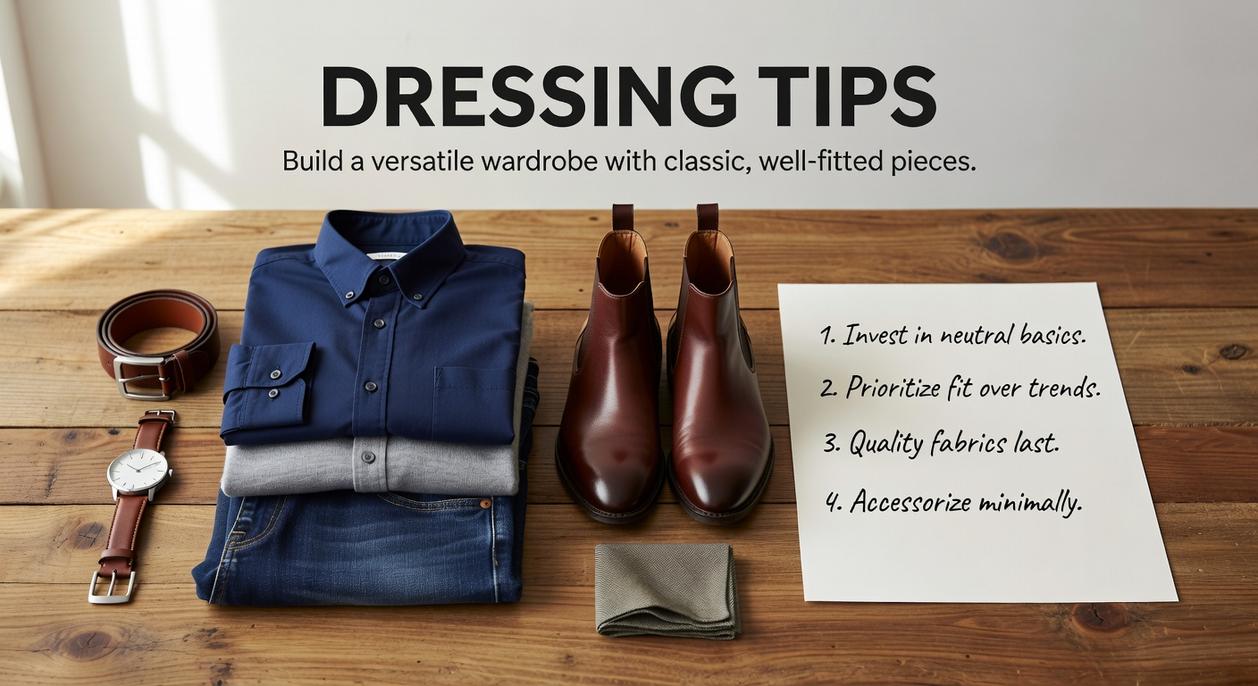
You know what separates an outfit that looks thrown together from one that looks intentional?
Texture.
Most people think about color first. They match their shirt to their pants and call it a day. But that’s only half the picture.
When you mix different textures, you create something that catches the eye. Even if you’re wearing all black (which I do more often than I’d like to admit), the contrast between materials makes everything more interesting.
Why Texture Actually Matters
Here’s what I mean.
A smooth silk blouse with rugged denim jeans creates tension. The soft fabric plays against the rough weave. Your eye notices that difference without you even thinking about it.
Same goes for soft cashmere paired with sleek leather. Or crisp cotton next to nubby tweed.
The materials talk to each other. And that conversation is what makes your outfit work.
Now, some people say texture is too complicated to think about. They argue that matching colors is hard enough without worrying about fabric types too.
But that’s where they’re wrong.
Texture is actually easier than color once you get the hang of it. You don’t need to memorize rules. You just need to feel the difference between smooth and rough, soft and stiff.
The Third Piece Changes Everything
Want a simple trick that works every time?
Add a third piece.
You’ve got your top and your bottoms. That’s your base. But when you throw on a blazer, vest, cardigan, or even a scarf, the whole thing looks complete.
I call this the third piece rule. It’s one of those dressing hacks jexphacks that sounds too simple to work, but it does.
The third layer signals that you thought about what you’re wearing. It shows intention (even if you grabbed it on your way out the door).
How to Layer Without Looking Bulky
The problem with layering is bulk.
Nobody wants to look like they’re wearing their entire closet. So here’s what works.
Start with thin, high quality fabrics as your base. A fitted tee or a lightweight merino sweater. Then add your second layer on top.
In warmer months, stick to two layers max. In winter, you can go three or four deep if each piece is relatively slim.
The key is fit. If your base layer is too loose, everything on top of it will bunch up and make you look bigger than you are.
Think about how to improve your financial position jexphacks. You start with a solid foundation and build from there. Same concept applies to getting dressed.
The Finishing Touch: Accessorizing with Purpose
I used to think more accessories meant a better outfit.
Turns out I was wrong.
A 2019 study from the Fashion Institute of Technology found that outfits with three or fewer accessories scored 23% higher in perceived style compared to those with five or more (FIT Style Perception Research, 2019). People actually notice when you’re trying too hard.
Here’s what works better.
Put everything on. Then take one thing off.
Coco Chanel said it decades ago and the advice still holds. That extra bracelet or second necklace? It’s probably the thing making your whole look feel cluttered.
Some people argue you should pile on accessories to show personality. They say minimalism is boring and that you need layers to stand out.
I get where they’re coming from. But here’s the problem with that thinking.
When everything screams for attention, nothing gets heard.
Choose your focal point.
If you’re wearing a bold statement necklace, keep your earrings simple. Want to stack delicate rings and layer thin chains? Skip the chunky bracelet. One piece leads while the others support.
Think of it like lighting a room. You need one main source and a few accents (not ten lamps all fighting for dominance).
Your shoes and bag change everything.
I tested this with the same black dress for a week. Sneakers and a canvas tote on Monday felt completely different from heels and a leather clutch on Friday. Same dress. Different vibe.
The dressing hacks at jexphacks show how swapping these two items can take you from coffee run to cocktail party without changing your actual outfit.
Don’t sleep on belts.
A belt does three things most people miss. It defines your waist when a dress hangs shapeless. It adds structure to an oversized blazer. And it introduces color or texture without overwhelming your look.
I cinched a belt over a loose sweater dress last week and suddenly had a silhouette. No belt? I looked like I was wearing a sack.
The math is simple. Fewer pieces with more intention beats more pieces with less thought every single time.
Putting It All Together: Your Path to Effortless Style
You now have the four pillars that make getting dressed actually work.
Proportion. Color. Texture. Accessories.
These aren’t complicated rules. They’re simple techniques that turn basic pieces into outfits people notice.
Getting dressed should feel creative, not stressful. You shouldn’t stand in front of your closet every morning feeling stuck.
Here’s why this approach works: You’re building skills instead of chasing trends. Fast fashion comes and goes, but understanding how clothes work together? That stays with you.
Your style becomes timeless. More importantly, it becomes yours.
Try one thing this week. Just one.
Add a third piece to what you’d normally wear. A blazer over your t-shirt and jeans. A cardigan with your dress. A denim jacket over everything.
You’ll see the difference right away.
dressing hacks jexphacks gives you the tools. Now you just need to use them.
 Orynthara Gleam is the visionary founder and driving force behind Jexphacks.com, a platform born out of a profound passion for technology and digital innovation. With a keen eye for emerging trends and a dedication to demystifying complex concepts, Orynthara established the site as an accessible, forward-thinking resource for tech enthusiasts and curious minds alike. Guided by a mission to inspire and educate, they continue to curate insightful content that empowers readers to navigate, understand, and master the ever-evolving digital landscape.