
You’re busy all day but nothing actually gets done.
I know that feeling. You check off tasks but the important stuff keeps sliding. Your to-do list grows faster than you can work through it.
Here’s the thing: you don’t need another complicated productivity system. You need simple changes that work right away.
I put together this guide because most efficiency advice is too much work to implement. Who has time to overhaul their entire routine?
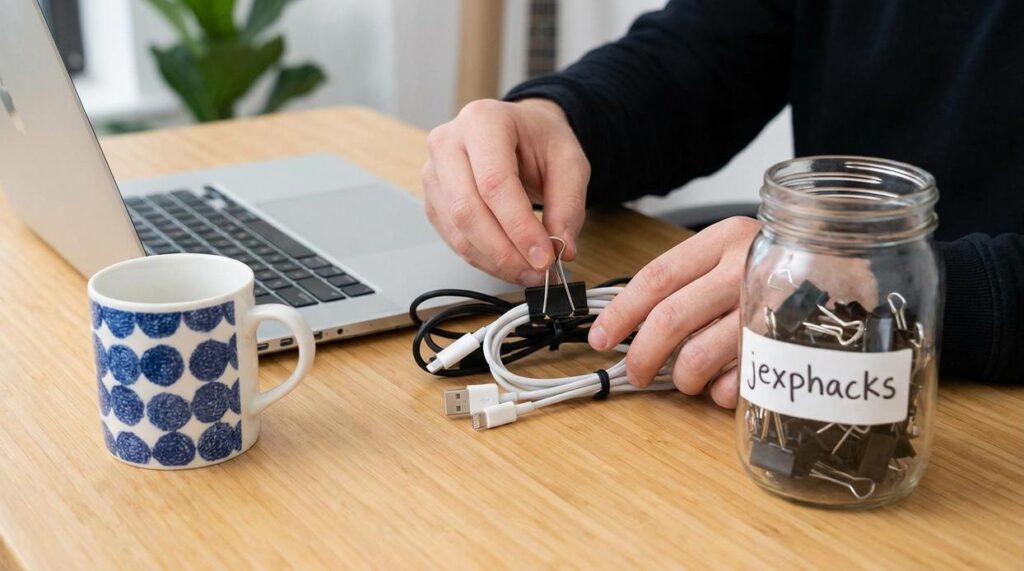
These are everyday hacks from jexphacks that you can start using today. No learning curve. No special tools. Just practical tips that make your day run smoother.
We tested these with real people who have real schedules. Not productivity gurus with assistants and flexible calendars. People who juggle work, family, and everything else.
You’ll find quick wins that actually stick. Small adjustments that add up to hours saved each week.
No theory. No fluff. Just what works when you’re trying to get through your day without losing your mind.
The Morning Kickstart: Winning Your Day in the First Hour
You know that feeling when your alarm goes off and you’re already behind?
I used to start every morning scrambling. Looking for clean clothes. Deciding what to eat. Staring at my phone for twenty minutes before my brain even turned on.
Then I’d wonder why I felt stressed by 9 AM.
Here’s what changed everything for me.
The night before matters more than the morning itself.
I know some people say mornings should be spontaneous. That planning everything kills the vibe and makes you robotic. They think you should just wake up and see how you feel.
But that’s exactly the problem. When you wake up, you’re not at your best. Your willpower is low and your brain is foggy.
So I started using what I call the Prepare Ahead Principle. Every night before bed, I lay out my clothes. Pack my bag. Set up the coffee maker. It takes maybe five minutes.
The result? I don’t waste mental energy on tiny decisions when I can barely think straight.
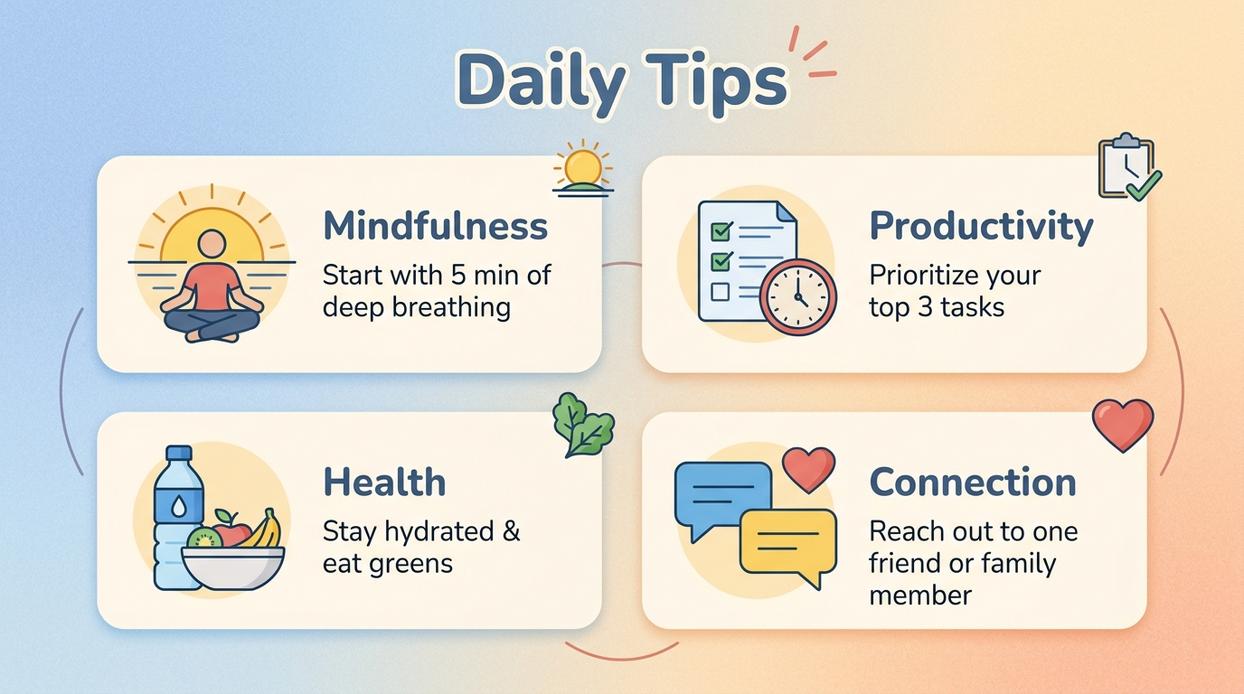
Next up is the Top 3 Focus Method. Before I even look at my phone (and this is the hard part), I write down three tasks that actually matter. Not busy work. Not emails that can wait. The things that’ll make me feel like I won something today.
This is straight from the jexphacks playbook. You need a target or you’ll just react to whatever screams loudest.
Finally, there’s the Two-Minute Rule. If something takes less than two minutes, I do it right then. Respond to that quick text. Throw the dishes in the dishwasher. Take out the trash.
These tiny tasks pile up fast if you ignore them. Then you’ve got fifteen things nagging at you all day.
The first hour sets everything else in motion. Win it and the rest gets easier.
Master Your Environment: Designing for Focus and Flow
You know that feeling when you sit down to work and your brain just won’t cooperate?
I used to think it was a willpower problem. Turns out, it was my environment working against me.
Here’s what most productivity advice gets wrong. They tell you to just focus harder. Push through the distractions. But that’s like trying to swim upstream when you could just turn around.
Your environment either helps you or fights you. There’s no middle ground.
Let me break this down into three simple changes that actually work.
Digital Decluttering
Before you start working, close everything you don’t need. I mean everything.
Those twelve browser tabs? Close them. The Slack window you’re “monitoring”? Close it. Your phone buzzing every three minutes? Put it in Focus Mode.
Think of it like clearing your desk before starting a project. You wouldn’t try to write with a pile of junk in front of you (or maybe you would, but you shouldn’t).
Set a specific time block. Two hours. Three hours. Whatever works. During that window, only the tools you need stay open.
Physical Ready Position
This one sounds too simple to matter. But it does.
At the end of each day, reset your desk. Put things back where they belong. Throw out the coffee cups and snack wrappers.
Why? Because tomorrow morning, you’ll sit down to a clean slate. No mental friction. No “let me just clear this first” delays that eat up your best thinking hours.
Your physical space affects your mental space more than you realize. A cluttered desk creates a cluttered mind. Not because of some mystical energy thing, but because your brain has to process all that visual noise.
Tool Centralization
Keep what you need close.
Charger. Notebook. Pens. Water bottle. Whatever tools your work requires. They should all be within arm’s reach.
Every time you get up to find something, you break your concentration. It takes about 23 minutes to get back into deep focus after an interruption (according to research from UC Irvine). That’s not a small thing.
I learned this the hard way. I used to keep my charger in another room because I thought walking to get it was “good for me.” Sure, movement is great. But not when it derails an hour of focused work.
The jexphacks approach is pretty straightforward. Remove what distracts you. Keep what helps you. Reset between sessions.
Your environment should make focus easier, not harder. These three changes won’t solve everything, but they’ll stop your workspace from sabotaging you before you even start.
Smarter Task Management: From Overwhelmed to In Control
I used to keep 47 browser tabs open at once.
Every tab was something I needed to do. An email to answer. A document to review. A form to fill out. I’d bounce between them all day and somehow get nothing done.
Sound familiar?
Here’s what changed everything for me.
Task Batching
I started grouping similar work together. All my emails get answered in one 30-minute block each morning. Phone calls happen between 2 and 3 PM. No exceptions.
The difference was immediate. I stopped losing 10 minutes every time I switched from writing to email to calls and back again. That mental reset costs more than you think.
Break It Down
Last month I stared at “reorganize garage” on my to-do list for three weeks straight. Know why? Because it felt massive.
Then I tried something different. I wrote down the actual steps. Sort tools. Donate old paint cans. Install shelving brackets. Suddenly I had tasks I could actually start.
Big projects paralyze you. Small steps don’t.
Timeboxing
This one felt weird at first but stick with me.
Instead of working on something until it’s perfect, I give myself a fixed window. 45 minutes to draft that proposal. 20 minutes to plan next week’s meals (one of those everyday hacks jexphacks that actually saves time).
When the timer goes off, I stop. Even if it’s not done.
Sounds counterproductive, right? But here’s what happens. I actually start things now because 45 minutes feels doable. And most tasks expand to fill whatever time you give them anyway.
I still keep too many tabs open sometimes. Old habits die hard.
But now I close them without the panic.
Leveraging Simple Habits to Reduce Mental Load
Your brain wasn’t built to remember everything.
But most of us treat it like a filing cabinet. We stuff it with tasks, ideas, reminders and random thoughts until we can’t think straight.
Some people say you should just power through. They claim a strong mind can handle anything you throw at it. And sure, that sounds tough and admirable.
But here’s what actually happens.
Your mental capacity gets eaten up by trivial stuff. What to make for dinner. Whether you paid that bill. That idea you had three days ago that you can’t quite remember.
I’ve found three simple habits that actually work. Not because they’re fancy, but because they take the load off.
The ‘Brain Dump’ vs Trying to Remember Everything
You can either trust your memory or trust a system. I choose the system every time.
Keep a notebook or digital note handy. The second a thought pops up, write it down. You’ll deal with it later.
This isn’t about being organized (though that’s a nice side effect). It’s about freeing your mind to focus on what’s in front of you right now.
Automate the Mundane
Here’s the comparison that matters. You can spend mental energy on bills and routine tasks. Or you can set them up once and forget about them.
Set up auto-payments. Create email filters. Use recurring calendar events for anything that repeats.
Every small thing you automate is one less thing taking up space in your head. These everyday hacks jexphacks add up faster than you think.
The ‘End of Day’ Shutdown
Most people just stop working and walk away. Then they spend their evening thinking about what they didn’t finish.
I spend 5-10 minutes at the end of each workday doing two things. Review what I got done and pick my top three tasks for tomorrow.
This gives you closure. More importantly, it lets you actually disconnect when you’re done.
Efficiency is a Habit, Not a Hack
You now have a toolkit of simple, practical tips to immediately simplify your daily tasks and improve your efficiency.
The feeling of being overwhelmed is a cycle. But you can break it without complex systems or expensive tools. Small, consistent actions do the work.
These tips work because they reduce friction. They eliminate unnecessary decisions and protect your most valuable resource: your focus.
Here’s what matters most: Don’t try to implement everything at once.
Choose just one tip from this list. Commit to practicing it for the next week. That’s it.
Small wins build powerful momentum. You’ll see the difference faster than you think.
Start with one change today. Your future self will thank you for it.
For more everyday hacks jexphacks that actually work, keep experimenting and find what fits your rhythm.
 Orynthara Gleam is the visionary founder and driving force behind Jexphacks.com, a platform born out of a profound passion for technology and digital innovation. With a keen eye for emerging trends and a dedication to demystifying complex concepts, Orynthara established the site as an accessible, forward-thinking resource for tech enthusiasts and curious minds alike. Guided by a mission to inspire and educate, they continue to curate insightful content that empowers readers to navigate, understand, and master the ever-evolving digital landscape.