
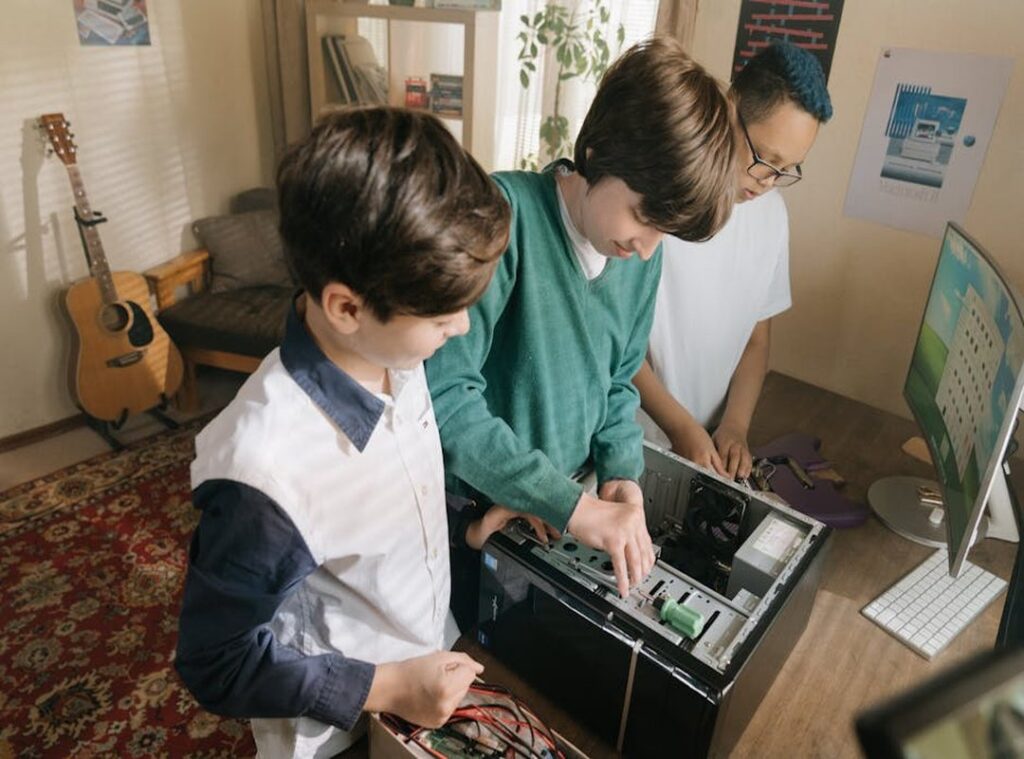
I used to think “computer geek” meant someone who spoke in code and lived in a basement.
Turns out it’s way messier than that.
You’ve probably seen the term Dtrgstechfacts Computer Geeks From Digitalrgs pop up somewhere. And you’re wondering: what the hell does that even mean? Is it a group?
A blog? A joke? A typo that got weirdly serious?
It’s not a brand. It’s not a company. It’s not some secret tech cult (though sometimes it feels like one).
I’ve spent years working alongside these people (debugging) servers at 3 a.m., watching them explain TCP/IP like it’s breakfast cereal, hearing them argue passionately about keyboard switches.
Tech isn’t magic. It’s built. By real people.
With habits, blind spots, and weird obsessions.
This article cuts through the noise. No jargon. No worship.
No fear.
You’ll walk away knowing who these folks actually are. And why their work shows up in your phone, your car, your thermostat.
And yes (we’re) going to settle what Dtrgstechfacts Computer Geeks From Digitalrgs really is. No fluff. Just clarity.
Who Even Calls Themselves a “Computer Geek”?
I used to cringe at that label. (Still do, sometimes.)
Then I met someone rebuilding a 20-year-old router just to see if it could run OpenWrt.
That’s when I got it.
A computer geek isn’t a stereotype. It’s a person who watches the fan spin and wonders why it stuttered at 37°C.
They’re the ones who pause Netflix to check their Pi-hole logs. (Yes, really.)
You’ll find them in server rooms, garages, and coffee shops. Not because they love cables or syntax, but because they love figuring things out.
Some build PCs from scratch. Some debug DNS leaks at midnight. Others write bash scripts to rename 400 photos.
None of them are “just coders.”
One friend spent six months learning how TLS handshakes work. Not for a job, but to stop trusting “secure” badges blindly.
Another turned her laundry room into a homelab with three old laptops running Kubernetes. (She named them after Star Trek engineers.)
Discover the latest insights and trends from the tech world with Dtrgstechfacts, a hub for computer enthusiasts and digital experts.
This is what Dtrgstechfacts covers. Real people doing real tech stuff, no costume required.
You don’t need a degree. You need curiosity and the nerve to break something (then) fix it better.
I’ve bricked two Raspberry Pis. (Worth it.)
You’ve probably done something similar.
So ask yourself: When was the last time you opened a device not to replace a part (but) to see how it talks to the world?
That’s the start.
No title needed. Just keep going.
Digital Tech Is Just… There
I check my phone before my eyes open.
You do too.
It’s not magic. It’s code. Servers.
Cables buried under streets. Someone built that. Someone keeps it running.
Digital tech runs everything now. Banking. Groceries.
Doctor visits. Even your thermostat. You don’t think about it.
Until it breaks.
That invisible stuff? The internet. Cloud storage.
Windows. iOS. Linux. It’s all held together by people who read error logs for fun.
(Did you know a typo in one config file can take down a whole hospital system?)
Video calls let me see my sister across the country. Online banking means I never stand in line again. My lights turn on when I say “Hey Google.”
None of that works without constant updates, patches, and late-night fixes.
Tech doesn’t stand still.
Neither do the people fixing it.
I used to think “computer geek” meant someone hunched over a terminal eating cold pizza.
Turns out it’s the person who made sure your Zoom call didn’t freeze during your job interview.
The work is constant. Unseen. Necessary.
To enhance your productivity as a computer geek, consider exploring tips on How to Maximize Efficiency Dtrgstechfacts.
Dtrgstechfacts Computer Geeks From Digitalrgs keep the gears turning while most of us just click “send.”
You ever wonder what happens when they go on vacation?
Neither do they.
Geeks Build What’s Next

I watched a kid in my dorm solder a Raspberry Pi into a toaster. He had no idea what it would do yet. Just wanted to see if it could.
That’s how most real digital innovation starts. Not in boardrooms. In garages, basements, late-night Slack threads.
Dtrgstechfacts Computer Geeks From Digitalrgs don’t wait for permission. They break things first. Then fix them better.
You think Linux runs the world? It started with one guy pissed off at Minix. Firefox?
Built by people who hated how slow browsers were. Arduino? Two teachers tired of explaining microcontrollers with textbooks.
They’re the first to try WebAssembly. The first to jailbreak a smart speaker. The first to ask why a chip can’t run Rust bare metal.
And when they share it? That’s where open source breathes. That’s where hardware gets cheaper.
That’s where software stops being magic and starts being yours.
Want to move faster with that energy?
How to Maximize Efficiency Dtrgstechfacts shows how to keep up without burning out.
You ever stay up past 3 a.m. just to make something work? Yeah. Me too.
Tech Enthusiasts Aren’t Who You Think
I’ve been called a “computer geek” since high school.
It always came with assumptions.
They think I don’t talk to people. (I run weekly coding meetups.)
They think I only care about code. (I paint, fix motorcycles, and coach youth soccer.)
Here’s the thing. they think I lack creativity.
As technology continues to evolve, it’s important to understand What Are Essential Digital Skills Dtrgstechfacts for staying relevant in the digital age.
(Last month I built a tool that cut our team’s reporting time by 70%.)
That stereotype is flat wrong.
Most tech enthusiasts I know thrive in teams. They ask questions. They listen.
They translate messy problems into working tools.
You need that kind of person when your website crashes at 3 a.m.
Or when your client needs a custom solution no off-the-shelf app handles.
Their focus isn’t isolation (it’s) solving things that matter.
And it shows up everywhere: better hospital software, clearer school dashboards, even fairer hiring algorithms.
None of that happens in a vacuum. It happens because someone who loves systems also loves people.
If you still picture hoodies and headphones, you’re missing the point.
What Are Important Digital Skills Dtrgstechfacts
Real People Behind the Screens
I get it. You typed Dtrgstechfacts Computer Geeks From Digitalrgs because you were confused. Maybe you heard the term and felt out of place.
Maybe you stared at a device and wondered who actually built it (and) why it works at all.
That confusion? It’s real. And it’s okay.
These aren’t mythical wizards. They’re people. Like your neighbor.
Your coworker. That quiet kid in class who fixed the Wi-Fi without asking.
They care. They tinker. They break things to learn how they hold together.
You don’t need to become one of them to benefit from what they do. But you do need to stop seeing tech as magic (and) start seeing it as human work.
That shift changes everything.
It means you can ask questions instead of nodding along. It means you stop blaming yourself when something glitches. It means you notice the person (not) just the product.
So next time your phone updates, or your router blinks green, or a website loads instantly. Pause for two seconds.
Say thanks. Out loud if you want.
Then go look up one thing that’s always puzzled you about how tech works. Just one.
No pressure. No jargon. Just curiosity.
That’s where understanding starts.
Not with a degree. Not with a manual.
With you deciding it’s worth your attention.
The digital world isn’t running itself. People are building it (right) now. And they’re not that far away.
To thrive in today’s tech-driven landscape, understanding the fundamentals is crucial, so be sure to explore What Are Essential Digital Skills Dtrgstechfacts.
Go find one. Talk to them. Ask them how they got started.
 As a core contributor to the Jexphacks.com team, Zayrithia Kinlark brings a sharp analytical mind and a deep curiosity for the mechanics of modern technology. Specializing in breaking down complex digital advancements, Zayrithia excels at turning intricate tech concepts into highly engaging, practical insights for the platform's readers. Their dedication to exploring the frontiers of tech ensures that the community always stays a step ahead in an ever-shifting digital world.