
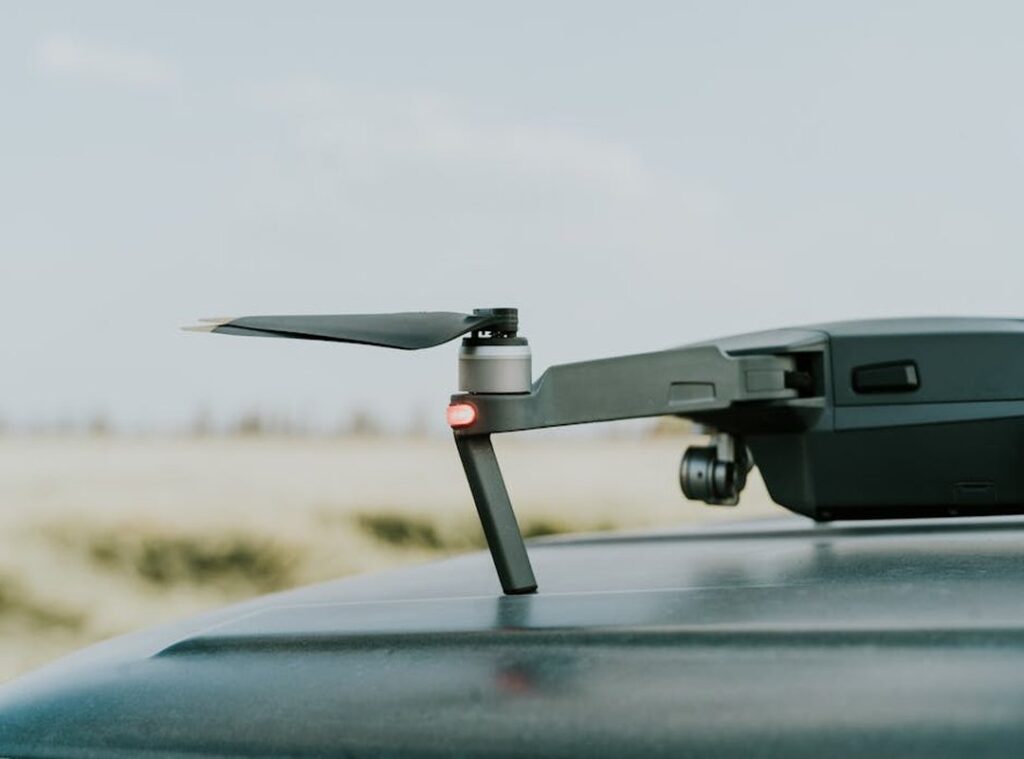
Drone technology is not just a buzzword anymore. It’s changing how we think about everything from delivery services to agriculture. I know what you might be thinking: can these flying gadgets really make a difference?
Trust me, they can, and they’re evolving fast.
The year 2024 is set to be a milestone for drone technology 2024. New regulations, improved designs, and new applications are on the horizon. I’ll dive into the trends shaping this tech and why they matter to you.
Expect to learn how businesses are adopting drones and the impact on daily life. I’ll also cover the challenges we face, like privacy concerns and safety issues. This isn’t just tech jargon; it’s about real-world implications.
By the end of this article, you’ll understand drone technology’s potential and how it might affect your world. Let’s get into it.
Redefining Aerial Technology: What’s New in 2024?
Aerial technology isn’t just about planes anymore. In 2024, it means drones, eVTOLs (those nifty vertical take-off things), high-altitude platforms, and advanced satellites. We’re moving from isolated systems to integrated airspaces.
Everything’s talking to each other now. Fancy, right?
Does drone technology 2024 seem like a sci-fi movie? It should. The convergence of hardware, software, and artificial intelligence is the real deal.
We’re not just flying drones around for fun. These systems are revolutionizing industries (shipping,) agriculture, even delivery of that pizza you love.
But here’s the kicker: it’s not all about the machines. It’s about connectivity. All these gadgets are now part of a network.
Imagine your smart home devices important to your daily life, seamlessly interacting with aerial tech. Speaking of which, you might want to check out smart home devices important to see how they fit in.
2024 is the year where the sky’s not the limit. It’s just the beginning. Are you ready for this ride?
Because it’s going to be wild. Think less Jetsons, more serious tech revolution. Buckle up.
Drone Evolution: Smarter, Safer, More Autonomous
Welcome to the future of drone technology 2024. We’re seeing big leaps in drone autonomy. AI-powered navigation is no longer a pipe dream.
It’s here. Drones now dodge obstacles with ease. They think for themselves (almost).
You’ve probably heard about swarm intelligence. Drones acting like a school of fish. It’s happening.
Drones are getting smarter every day.
Sensor technology has also jumped forward. Miniaturized LiDAR? Check.
Enhanced thermal imaging? Got it. Hyperspectral sensors?
Yes. These advancements are game-changers. Imagine drones inspecting infrastructure with pinpoint accuracy.
Or aiding in precision agriculture by analyzing crop health. It’s not just flashy tech; it’s practical.
Now, let’s talk use cases. Drones aren’t just for hobbyists anymore. They’re diving into serious business.
Think fast last-mile delivery. Or key public safety operations where time is everything. The potential is massive.
But what’s holding them back? Regulations. Yep, those pesky rules.
The challenge is integrating drones into national airspaces, especially for beyond-visual-line-of-sight flights. It’s a work in progress.
Here’s a thought: What if we could solve industry problems with these advancements? Some companies are already doing it. They’re using drones to inspect hard-to-reach places, saving time and money.
Others are employing drones in disaster zones, making rescue operations safer and more fast.
In short, drones are evolving. They’re not just buzzing toys. They’re becoming indispensable tools.
And if you ask me, that’s pretty exciting. Who wouldn’t want to see where this technology takes us next? The possibilities are endless.
Urban Air Mobility: Taking Flight
Urban Air Mobility (UAM) is changing the skyline. It’s about using new technology to move people around cities quickly and easily. Electric Vertical Take-Off and Landing (eVTOL) aircraft are part of this.
These machines lift off like helicopters but fly like airplanes. (Think The Jetsons, but real.) We’re seeing a shift in urban transportation. It’s not just a dream anymore.
In 2024, major strides were made. Successful flight tests and certification processes are underway. Companies are forming partnerships to push this tech forward.
It’s like watching history unfold. And drone technology 2024 is playing a big role in this transformation.
But what are the real benefits? Imagine cutting travel time in half. Skipping traffic jams.
That’s the promise of UAM and eVTOLs. This isn’t just about convenience. It’s about transforming our cities and our day-to-day lives.
Safety is a big deal. Nobody wants flying cars crashing into buildings. Developers are using advanced safety protocols.
They’ve also made big improvements in noise reduction. Can you imagine a quiet city with flying taxis? I can.
Infrastructure is important. We’re talking vertiports and air traffic management. Building this is expensive but key for the future.
These elements are key to making UAM viable for everyone, ensuring smooth operations.
Right now, we’re in the testing phase. Some concepts are close to being commercialized, but we aren’t there yet. For more on tech trends, check out our virtual reality headsets guide.
The future’s looking bright (and) airborne.
AI and 5G: The Power Duo of Aerial Tech
Drone technology in 2024 is nothing short of a marvel. AI and 5G are at its core, transforming what these flying machines can do. You ever think about how they stay in the air so smoothly?
Predictive maintenance, that’s how. AI predicts mechanical issues before they happen, saving time and money. And those flawless flight paths?
AI again, optimizing every move.
But what about safety? Ever wonder why drones rarely crash into each other? Advanced safety systems, folks.
AI prevents collisions, making the sky a safer place for everyone.
5G steps in with its real-time data transfer. Imagine controlling a drone with zero lag. That’s what ultra-low-latency 5G brings.
It’s a game-changer for beyond visual line of sight (BVLOS) operations, allowing drones to venture where they couldn’t before. Speaking of which, secure BVLOS is key to unleashing american drone dominance.
Now, what happens when you’re flying drones in remote areas? Satellite links keep them connected, no matter how challenging the terrain. These communication systems are the real deal.
Together, AI and 5G are building a smarter airspace. Think of it as a step towards autonomous air traffic management. It’s not just tech; it’s the future of how we get through the skies.
Can you imagine what comes next? Because I can’t wait to see it unfold.
Beyond the Horizon: Aerial Tech’s Next Leap
Low-Earth orbit satellites are everywhere now, aren’t they? They’re revolutionizing connectivity across the globe. Precise navigation and Earth observation?
It’s like something out of a sci-fi movie. Rapid global travel and defense? Yep, it’s on the horizon.
All thanks to this massive net above our heads. But just wait (High-Altitude) Platform Stations (HAPS) are coming up fast as a game-changer, providing regional coverage beyond what drones can handle even by 2024 standards. And don’t even get me started on hypersonic flight.
The future’s all about integrating these layers into one sky-defying system. Exciting, right?
Stay Ahead in Aerial Tech
I’ve shown you how to get through the complex world of aerial technology advancements in 2024. Keeping up with rapid shifts is tough. But understanding these changes is key for your future.
You need to stay informed to use the benefits of drone technology 2024 in your industry.
What’s next? Dive deeper into related articles on Jexphacks.com. Subscribe to the newsletter for ongoing updates.
Engage with the community to discuss takeaways and questions. Don’t let these advancements pass you by. Take action now and equip yourself for tomorrow’s tech space.
 Sylrith Marrowlance serves as a key creative and technical voice at Jexphacks.com, dedicated to uncovering the practical side of new tech and digital trends. With a talent for identifying the tools and shifts that matter most to tech enthusiasts, Sylrith crafts content that bridges the gap between raw innovation and everyday application. Their sharp perspective and passion for discovery help maintain the platform's reputation as a go-to resource for curious minds.